PCI DSS for Startups: What You Need to Know Before Handling Payments
PCI DSS is a security standard that ensures businesses protect customers’ payment card data. This blog looks at the benefits of PCI DSS compliance and provides startups with a practical checklist to secure payments.




Updated March 18, 2026
Are you ready to accept card payments? If so, Payment Card Industry Data Security Standard (PCI DSS) compliance should be on your radar—sooner rather than later. While it might seem like something only big companies worry about, meeting security standards early on can save your startup from major risks later.
In this blog, we’ll walk you through the real benefits of PCI DSS compliance, especially for early-stage startups. You’ll also get a practical PCI DSS compliance checklist that shows what steps to take without slowing down your growth. Whether you’re using third-party platforms or handling cardholder data directly, you’ll learn how to stay secure and compliant.
» Take the first step towards PCI DSS compliance: Reach out to our experts
What Is PCI DSS?
PCI DSS, is a set of security rules that any business must follow if it stores, processes, or transmits credit card data. It was created to prevent fraud and protect cardholder information.
Whether you're running a small online store or building a new mobile app, PCI DSS applies the moment you accept card payments. Getting this wrong can lead to data breaches, legal trouble, and serious damage to your startup's growth and reputation.
» Enhance your understanding of PCI DSS compliance
Benefits of PCI DSS Compliance for Startups
PCI DSS compliance does more than protect card data. It helps your startup grow with fewer risks and more credibility. Here's what it gives you:
- It builds investor confidence: Investors want to back startups that manage risk well and take security seriously. Being PCI DSS compliant shows you protect sensitive cardholder data and follow industry standards. This signals that your startup is responsible and ready to scale without shortcuts.
- It unlocks business partnerships: Many marketplaces, banks, and payment processors require PCI compliance before they will work with your startup. Without meeting these standards, you risk missing out on valuable deals like API integrations, white-label partnerships, or access to large sales channels.
- It supports safe scaling: As your startup grows, you’ll handle more transactions and sensitive data. Managing this without a proper security framework can lead to costly breaches or downtime. This approach reduces surprises and expensive fixes later.
- It builds customer trust and loyalty: Customers care deeply about how businesses protect their payment information. When your startup complies with PCI DSS, you send a clear message that you prioritize their security. This builds confidence and encourages customers to shop with you again.
» Here are more benefits of being PCI DSS compliant

Start Your PCI DSS Journey
Get expert guidance to protect your startup and stay ahead of compliance requirements.
4 Ways Startups Handle Payments
Before you start thinking about compliance, it’s important to understand how startups usually accept payments. The model you choose affects how much cardholder data you deal with—and how much security responsibility you take on.
1. Credit and Debit Cards
Card payments are still one of the most common ways for startups to get paid, especially in the U.S. Platforms like Stripe, PayPal, and Braintree handle the card data and take care of security and compliance on your behalf. That means you don’t need to store sensitive information yourself, which makes things easier and safer.
These tools are fast to set up, offer good fraud protection, and make it easier to scale. Yes, there are processing fees, but most startups find it’s worth it to reach more customers quickly.
2. Cash
Cash is simple and doesn’t involve any tech setup or processing fees. It’s still a go-to option for local, in-person businesses like food stalls or pop-up shops. But cash handling comes with its own risks. There’s no digital trail, which makes tracking sales harder. You’re also responsible for safely storing it and preventing theft.
For low-volume or informal setups, it can work. But it’s not scalable and doesn’t offer much long-term credibility with investors or partners.
3. Digital Wallets
Digital wallets like Apple Pay and Google Pay are becoming more popular, especially with mobile-first customers. These let people pay quickly with their phones—often using just a fingerprint or face scan. As a startup, you can accept these through services like Stripe without needing to store card data.
That makes compliance easier and reduces your security risks. If your customers expect fast, modern, contactless payments, digital wallets are a smart choice.
4. Gift Cards
Gift cards, whether physical or digital, are a great way to boost cash flow and encourage repeat business. They’re managed through your POS or e-commerce system and come with fewer security concerns since you're not dealing with outside payment info when they’re redeemed.
You’ll still need to protect against fraud and follow local laws, like those around expiration dates or fees. They’re especially useful for retail, food, and service-based startups.
» Explore the standards you should meet when building a security culture
Risks When Handling Cardholder Data
Once your startup is involved in storing, transmitting, or processing card data, there are real risks you need to be aware of, no matter your size.
Risk | What it means | What you can do |
|---|---|---|
Legal risk | If you don’t meet PCI DSS or data privacy laws like GDPR or CCPA, you could face fines or lose the ability to process card payments. | Use a PCI-compliant payment processor like Stripe or PayPal. Avoid storing sensitive card data directly. |
Operational risk | Managing cardholder data requires secure infrastructure, regular checks, and constant updates—all of which take time and resources away from product development. | Minimize your data handling scope. Automate security tasks and use services that manage compliance for you. |
Security risk | Startups are common targets for cybercriminals. If your systems aren’t secure, attackers could steal payment data, causing fraud and financial loss. | Use encrypted transfers, strong passwords, secure APIs, and regular penetration testing. |
Reputational risk | A payment data breach can damage customer trust, lead to negative press, and make it harder to raise funding or attract partners. | Be transparent about your security practices. Choose payment methods that reduce your exposure to sensitive data. |
» Avoid these common PCI DSS pitfalls
When Should a Startup Start Thinking About PCI DSS?
You don’t need a big user base or high revenue to start planning for PCI DSS. Here are early signs that it’s time to take compliance seriously—even if you're still small.
- You're handling cardholder data yourself: If your startup plans to store, process, or collect credit card details on your own systems, it’s time to start thinking about PCI DSS. Even limited handling of card data comes with serious security responsibilities.
- Your payment volume or user base is growing: You may still be early in revenue, but if your number of users or transactions is rising fast, that’s a signal to prepare. More volume means more data to protect and more chances for mistakes or breaches.
- You're adding new payment methods: Launching a website, mobile app, or physical checkout changes how payments flow through your business. Each of these channels brings new risks and compliance requirements. Thinking about PCI early ensures that all your sales paths are protected and aligned.
- You're building tech infrastructure around payments: If you're building custom tools, integrations, or back-end systems that touch payment data, your PCI scope expands fast. Even if you’re not handling the data directly yet, the tech decisions you make today will affect compliance later.
» Check out these cyber tips for your startup plan
PCI DSS 12-Step Compliance Checklist for Startups
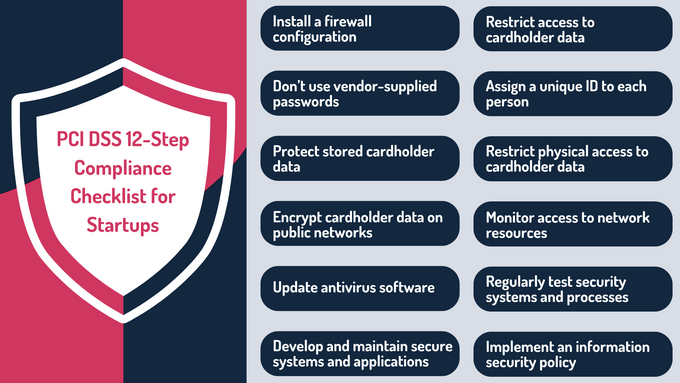
1. Install and Maintain a Firewall Configuration
Firewalls control the flow of data between your internal network and outside sources. They block unauthorized access and protect sensitive payment data from attackers. To keep your systems secure, follow these basic firewall practices:
- Set up firewalls at all network entry points, including internet gateways and wireless networks.
- Allow only trusted traffic that your business needs.
- Regularly review and update firewall rules to keep up with changes.
» Make sure you know how to secure your wireless network with regular penetration testing
2. Don’t Use Vendor-Supplied Defaults for System Passwords
Default usernames, passwords, and settings are widely known and easy for hackers to exploit. For all hardware and software, including POS systems, routers, firewalls, and applications, do the following:
- Change all default usernames and passwords immediately.
- Use complex, unique passwords.
- Configure security settings according to best practices, and do not leave them as default.
» Read more: How to fortify your business against password spraying attacks
3. Protect Stored Cardholder Data
All cardholder data within the environment must be protected from the moment it enters the system. To achieve this, you need to understand where the data is stored, who has access, and how it moves between systems. You also need to ensure it's securely deleted when no longer needed.
Remember: Primary Account Numbers (PANs) must be masked so that only the last few digits are visible, reducing the risk of exposure.
4. Encrypt Cardholder Data on Public Networks
When cardholder data moves across the internet, Wi-Fi, or other open networks, encrypt it using strong protocols like TLS or SSL. This prevents attackers from intercepting and reading the data during transmission.
Pro Tip: Avoid sending unencrypted sensitive information, especially over wireless or public networks.
» Learn the difference between asymmetric and symmetric encryption
5. Regularly Update Antivirus Software
Malware can steal card data or create backdoors for attackers. Therefore:
- Install reputable antivirus software on all payment-related systems, including desktops, servers, and mobile devices.
- Keep antivirus software updated with the latest virus definitions and security patches.
- Ensure antivirus actively scans systems and logs any detections.
6. Develop and Maintain Secure Systems and Applications
Run regular risk assessments to find weak spots in your setup. This shows which systems need attention and helps plan where to improve security. Once the gaps are clear, apply updates and fixes without delay.
Make sure all systems stay updated, including servers, POS devices, operating systems, laptops, desktops, and firewalls. This reduces the chance of attackers using known flaws to get in.
» Here are 6 things you should know before hiring a risk assessment provider
7. Restrict Access to Cardholder Data
Not everyone in your startup needs access to cardholder data. Limit access strictly based on roles and responsibilities.
Use role-based access control (RBAC) and regularly review permissions to ensure only authorized personnel can view or handle sensitive data. This reduces the risk of accidental exposure or insider threats.
8. Assign a Unique ID to Each Person
Each user who accesses systems with cardholder data should have a unique login ID. This makes it easier to track user activity and hold individuals accountable. Avoid shared accounts or generic logins. Implement strong authentication methods to protect these accounts.
9. Restrict Physical Access to Cardholder Data
Physical security matters just as much as digital security. Limit access to servers, workstations, and storage locations that hold card data. Use locked rooms, access badges, security cameras, and logs to monitor and control who can enter these areas. Prevent unauthorized personnel from viewing or stealing physical records or devices.
10. Track and Monitor Access to Network Resources
Maintain detailed audit logs of all system and network access involving cardholder data. Log user logins, file accesses, configuration changes, and administrative activities. Regularly review these logs to detect unusual or suspicious activity quickly. Use centralized logging systems when possible for easier analysis.
11. Regularly Test Security Systems and Processes
Conduct vulnerability scans at least quarterly to identify security weaknesses in your network and applications. Perform penetration testing annually or after major changes to simulate attacks and find gaps. Fix discovered vulnerabilities promptly to keep defenses strong.
» Need more help? Follow our step-by-step guide to penetration testing
12. Implement an Information Security Policy for All Personnel
A clear information security policy sets the rules everyone in the company must follow to protect sensitive data. This policy covers how data should be handled, how to report security incidents, rules for passwords, and how to secure devices. To implement this effectively, focus on these key actions:
- Write simple, clear security policies that cover key areas like data use, incident response, passwords, and device protection.
- Make sure every person understands and agrees to these policies.
- Provide regular security training to keep everyone updated on threats and best practices.
» Learn how to build a robust PCI DSS security strategy beyond compliance
Cost-Effective Ways Startups Can Approach PCI DSS Compliance
Self-Assessment Questionnaire (SAQ)
Many startups can handle PCI compliance themselves using the SAQ. It’s a simple, affordable way to check if you’re following the rules—especially if you use third-party tools like Stripe or PayPal. You’ll review your security practices, answer questions about how you protect card data, and document what you do.
Take Note: Since it’s a self-check, it works best when your payment system is straightforward. If your setup is more complex, you might overlook risks or gaps without expert input.
Hiring a Qualified Security Assessor (QSA)
If your startup has a more complex payment flow or needs to meet strict partner or regulatory expectations, hiring a QSA is a smart move. These are certified professionals who review your systems, spot security issues, and guide you through fixing them.
Take Note: This route can be expensive, often running into thousands of dollars—but it's a solid choice for startups that want thorough oversight, stronger protection, and the credibility that comes with formal validation.
Using PCI-Compliant SaaS or Payment Platforms
A popular option for lean startups is to use PCI-compliant services like Stripe or PayPal that handle payment security on your behalf. This setup means your startup doesn’t directly store or process card data, which drastically reduces your compliance burden.
Take Note: While transaction fees may be a bit higher, the saved time, lower risk, and easier scaling usually make this the best fit for startups that are focused on growth.
» Feeling confused? Compare traditional compliance methods and automation platforms
Expert PCI DSS Guidance
Partner with GRSee Consulting to guide your startup through PCI DSS compliance.
Expert gap analysis to identify and fix security weaknesses quickly.
Certified QSAs to manage audits and ensure smooth certification.
Continuous monitoring and support to keep your certification current.
How GRSee Can Support Your Startup’s PCI Journey
PCI DSS compliance might feel overwhelming, but it doesn’t have to hold your startup back. Whether you’re just starting to accept payments or scaling fast, knowing what’s in scope—and what’s not—can save you time, money, and headaches.
At GRSee Consulting, we work with startups to build PCI strategies that actually work. Drawing on success stories from businesses like yours, we identify exactly which parts of your business need to comply, whether you handle raw card data, use tokenization, or rely on third-party platforms. We map how payments move through your systems and show you what to secure and how to secure it.
» Get started with GRSee’s PCI DSS solutions to simplify your security strategy
PCI DSS FAQ for Startups
When should my startup start thinking about PCI DSS compliance?
Start planning for PCI DSS as soon as you begin handling credit card data directly or your payment volume starts growing. Early planning avoids last-minute scrambling, helps you build secure systems from the start, and reduces long-term risks.
Do I still need PCI DSS compliance if I use Stripe or PayPal?
Yes, but your responsibilities are smaller. Services like Stripe or PayPal are PCI-compliant, so you don’t handle sensitive card data directly. You’ll still need to complete a Self-Assessment Questionnaire (SAQ) and follow basic security practices.
How can PCI DSS compliance actually help my startup grow?
It builds trust with customers and investors, opens doors to partnerships, and supports long-term scaling. Being compliant signals that your startup takes data security seriously, which sets you apart in competitive markets.